
Introduction
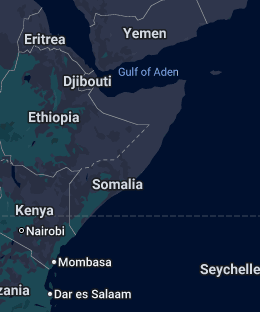
Somalia is a country with a deep and ancient history stretching back thousands of years. Located in the Horn of Africa, Somalia has long served as a bridge between Africa, the Middle East, and Asia. Its strategic position along the Indian Ocean and the Gulf of Aden made it a vital center for trade, cultural exchange, and religious influence. From early human settlements and ancient trade networks to Islamic sultanates, colonial rule, independence, and modern state-building efforts, Somalia’s history reflects resilience, adaptability, and a strong sense of identity.
This comprehensive overview explores the major historical periods of Somalia, highlighting its cultural heritage, political transformations, and the enduring spirit of its people.
1. Prehistoric and Ancient Somalia
Archaeological evidence shows that Somalia has been inhabited since prehistoric times. One of the most significant discoveries is the Laas Geel cave complex, located near Hargeisa. The rock paintings at Laas Geel, dating back thousands of years, depict cattle, humans, and ceremonial scenes. These paintings indicate that early Somali societies practiced pastoralism and had well-developed cultural traditions.
Ancient Egyptian records mention a land known as Punt, believed by many historians to include parts of modern-day Somalia. Punt was famous for exporting incense, myrrh, gold, ebony, and exotic animals to ancient Egypt. These records suggest that Somalia was integrated into long-distance trade networks as early as 3000 BCE.
Early Somali communities relied on livestock herding, fishing, and trade. Their mobility and adaptation to harsh environments laid the foundation for the pastoral culture that continues to influence Somali society today.
2. Maritime Trade and Early City-States
Due to its long coastline—the longest in mainland Africa—Somalia became a major maritime trading hub. From antiquity through the medieval period, Somali ports connected Africa with Arabia, Persia, India, and later China.
Ancient and medieval cities such as Opone (modern Hafun), Mogadishu, Berbera, Zeila, and Marka flourished as commercial centers. Somali merchants exported livestock, hides, ivory, incense, and agricultural products. In return, they imported textiles, ceramics, spices, and metals.
Mogadishu emerged as one of the most important cities in the region. It minted its own coins and was renowned for producing high-quality textiles. These developments demonstrate a sophisticated economic system and strong urban culture long before European involvement in the region.
3. The Arrival and Spread of Islam
Islam reached Somalia in the 7th century CE, shortly after the birth of Islam in Arabia. Muslim traders and scholars crossed the Red Sea and the Indian Ocean, bringing the new faith with them. Islam spread peacefully and was quickly adopted by Somali communities.
The introduction of Islam had a profound impact on Somali society. It shaped laws, education, social values, and governance. Mosques became centers of learning, and Somali cities developed close ties with other parts of the Muslim world.
One of the oldest mosques in East Africa, Arba’a Rukun Mosque in Mogadishu, dates back to the 13th century. Islam also strengthened Somalia’s cultural unity and connected it to global Islamic scholarship and trade networks.
- Islamic Sultanates and Regional Powers
Between the 10th and 16th centuries, powerful Islamic sultanates emerged in Somali territories. These states controlled trade routes, promoted Islamic learning, and maintained strong military forces.
The Ajuran Sultanate
The Ajuran Sultanate ruled large parts of southern and central Somalia. It established a centralized administration, built advanced irrigation systems, and maintained fortified cities. Ajuran engineers constructed wells and canals that supported agriculture and urban life. The sultanate successfully resisted early European expansion in the region.
The Sultanates of Ifat and Adal
The Ifat and Adal Sultanates, centered in northern Somalia and eastern Ethiopia, played a major role in regional politics. Under leaders such as Imam Ahmad ibn Ibrahim al-Ghazi (Ahmed Gurey), the Adal Sultanate led military campaigns that reshaped the political balance of the Horn of Africa during the 16th century.
Other Somali Sultanates
Other important states included the Warsangali Sultanate, Geledi Sultanate, and Hobyo Sultanate. These polities contributed to stability, trade, and cultural development across Somali regions.
- European Colonial Rule
In the late 19th century, European powers expanded into the Horn of Africa during the period known as the “Scramble for Africa.” Somalia was divided among three colonial administrations:
British Somaliland in the north
Italian Somaliland in the south
French Somaliland (modern Djibouti)
Colonial rule introduced new administrative systems, infrastructure, and economic structures. However, it also disrupted traditional governance and exploited local resources.
Anti-Colonial Resistance
Somalis strongly resisted colonial domination. One of the most prominent resistance movements was led by Sayyid Mohamed Abdulle Hassan, who organized the Dervish Movement. For over two decades, the Dervishes fought British, Italian, and Ethiopian forces, becoming a symbol of Somali nationalism and resistance.
- Independence and the Somali Republic (1960)
Somalia achieved independence in two stages. British Somaliland became independent on 26 June 1960, followed by Italian Somaliland on 1 July 1960. The two territories united to form the Somali Republic.
Aden Abdulle Osman (Aden Adde) became the country’s first president. The early years of independence were marked by democratic governance, a free press, and competitive elections. Somalia was often cited as one of Africa’s few functioning democracies during this period.
However, political fragmentation, clan-based competition, and economic challenges began to weaken the young state.
- The 1969 Military Coup and Socialist Rule
In 1969, following political instability and the assassination of President Abdirashid Ali Sharmarke, the military seized power. Mohamed Siad Barre led a bloodless coup and established a socialist government.
The regime introduced Scientific Socialism, nationalized key industries, and promoted mass literacy campaigns. One of the most significant achievements of this era was the adoption of the Latin script for the Somali language, which greatly expanded education and literacy.
Despite early progress, the government became increasingly authoritarian. Human rights abuses, economic decline, and the failed Ogaden War (1977–1978) against Ethiopia weakened the state.
- State Collapse and Civil War (1991)
In 1991, the Siad Barre government collapsed, leading to the disintegration of central authority. Somalia descended into civil war, marked by clan conflict, warlordism, and widespread humanitarian crises.
The absence of a central government led to famine, displacement, and international intervention. Despite these challenges, Somali society demonstrated resilience through informal economies, community networks, and private enterprise.
- Reconstruction and Federalism
From the early 2000s onward, Somali leaders and international partners initiated reconciliation and state-building efforts. In 2012, the Federal Government of Somalia was formally established.
Federal member states were created to decentralize power and promote local governance. While security challenges—particularly from extremist groups—remain, Somalia has made progress in rebuilding institutions, expanding education, and developing infrastructure.
- Somali Culture and Identity
Somali history cannot be separated from its culture. The Somali language, poetry, oral traditions, nomadic heritage, and Islamic faith form the foundation of national identity. Poetry has long served as a tool for communication, resistance, and social commentary.
Clan structures, while sometimes sources of conflict, have also provided social support and conflict-resolution mechanisms throughout history.
Conclusion
The history of Somalia is a story of endurance, trade, faith, and resistance. From ancient civilizations and Islamic sultanates to colonialism, independence, and modern reconstruction, Somalia has continuously adapted to changing circumstances.
Understanding Somalia’s history is essential for appreciating its present challenges and future potential. With its rich heritage, strategic location, and resilient people, Somalia continues its journey toward stability, unity, and development.